
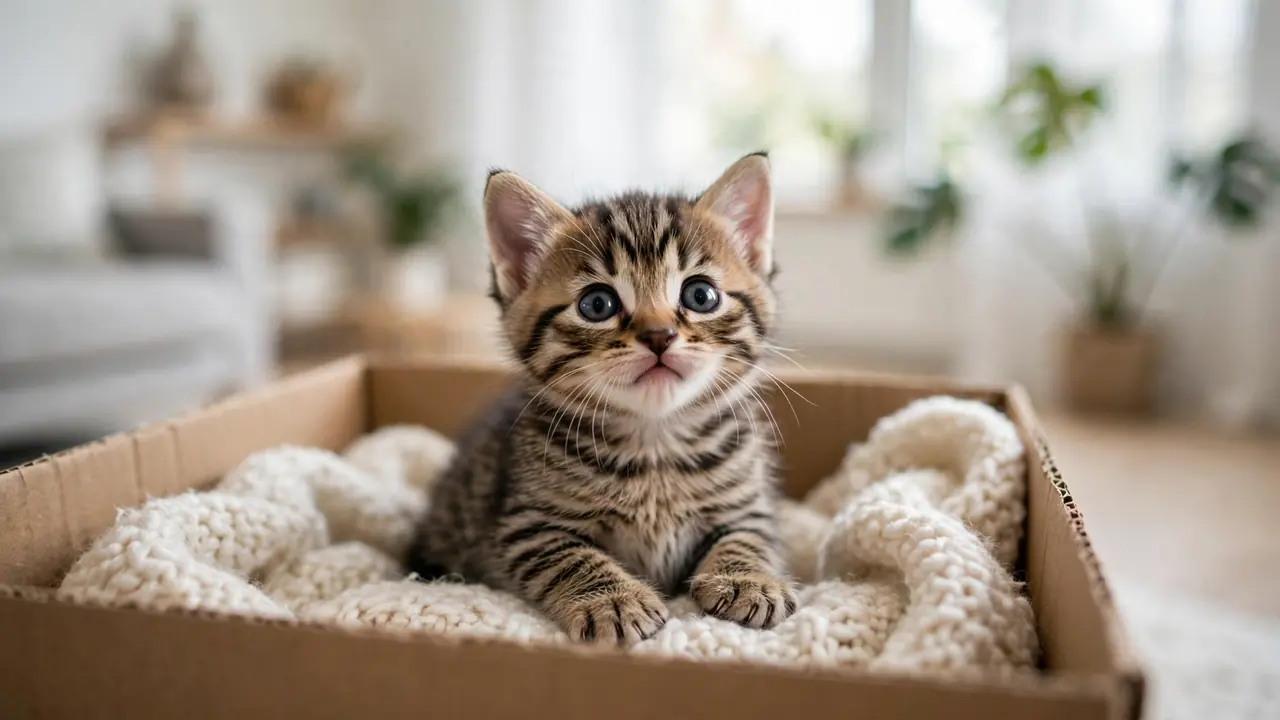
Your kitten is eight weeks old, weighs less than a bag of sugar, and has already tried to eat three things she should not have. This is exactly the moment to think about pet insurance, not after the first emergency vet visit.
Kittenhood is the cheapest and smartest window to buy coverage. Premiums are at their lifetime low, the medical record is a blank page, and every condition that appears after enrollment is covered instead of excluded. No other point in your cat’s life offers all three at once.
This guide covers when to enroll, what kitten insurance typically costs, what it covers and excludes, and the enrollment mistakes that cost new owners the most. If you are still comparing providers, our best pet insurance for cats ranking pairs well with this guide.
When to Enroll: As Soon as You Can
Most insurers let you enroll kittens from 8 weeks old, and earlier is better in almost every case. The day your kitten comes home is a fine day to start a policy. There is no benefit to waiting and several costs.
Waiting periods are the main reason to enroll early. Typical waits are a few days for accidents and around 14 days for illness, and anything that happens during the wait is not covered. Enroll at 8 weeks and the waits expire while your kitten is still tiny and low risk.
The deeper reason is pre-existing conditions. Any health issue noted by a vet before coverage begins is generally excluded for life. A kitten enrolled at 8 weeks has almost no medical history, which means almost nothing can be excluded. Every month you wait is a month where a vet visit can create a permanent exclusion.
What Kitten Insurance Costs
Kitten insurance is the cheapest pet insurance you can buy. Typical ranges for standard accident and illness coverage run $12 to $22 a month, depending on breed, zip code, and your deductible choice.
Here is how the settings move that number for a typical kitten:
- $250 deductible, 80 percent reimbursement: often $16 to $24 a month
- $500 deductible, 80 percent reimbursement: often $12 to $20 a month
- $500 deductible, 90 percent reimbursement: often $18 to $26 a month
- Accident only plan: often $8 to $15 a month
These are illustrative ranges, not quotes. Purebred kittens quote higher, coastal zip codes quote higher, and prices vary between companies. Get three real quotes with identical settings rather than trusting any article’s numbers, including this one. Our cat insurance cost breakdown explains the age curve in more detail.
One pricing quirk worth knowing: some insurers lock in your enrollment age for rating purposes, while others re-rate every year regardless. Ask how your premium will change as the kitten ages before you commit.
What Kitten Insurance Covers
A standard accident and illness plan covers the classic kitten catastrophes. Swallowed string and foreign objects, broken bones from fearless jumps, respiratory infections, and severe gastrointestinal trouble are all normally covered after waiting periods.
It also covers the congenital and hereditary conditions that surface early, as long as symptoms appeared after enrollment. This matters for purebred kittens, where heart or kidney issues sometimes appear in the first year. Confirm hereditary coverage explicitly when you buy.
Emergency care is the core value. Kittens are disproportionately accident prone: they fall, they chew, they explore with their mouths. One $3,000 foreign object surgery in the first year can exceed a decade of kitten-priced premiums.
Waiting Periods: Coverage Does Not Start Day One
Almost every policy has waiting periods between enrollment and when coverage begins. For kittens, the typical structure is a few days for accidents and about 14 days for illnesses. Some orthopedic conditions carry waits of six months or more.
Anything diagnosed during the waiting period is not covered, and worse, it can become a pre-existing condition going forward. A respiratory infection on day ten of a 14 day illness wait is the classic painful example.
A few companies shorten or waive waiting periods if a vet examines your kitten shortly after enrollment. Ask about it when you quote, and get the answer in writing. Our guide to waiting periods explained covers the variations in full.
What Kitten Insurance Does Not Cover
Standard plans do not cover routine kitten care. The first year vet visits, the vaccine series, the spay or neuter surgery, and flea prevention are all out of pocket unless you buy a wellness add-on. New owners are often surprised by this, so budget for it separately.
Pre-existing conditions are excluded, which is precisely why early enrollment matters. Anything in the vet record before day one of coverage stays out forever under most policies. Curable conditions may be reconsidered after a long symptom-free period at some companies; chronic ones will not.
Cosmetic procedures, breeding costs, and experimental treatments are excluded everywhere. Read the exclusions list before buying, not after your first denied claim. The pre-existing conditions guide explains exactly how insurers define the term.
Wellness Add-ons: Worth It for Kittens?
The first year of kitten ownership is the most routine-care heavy year of the cat’s life: multiple vaccine rounds, a spay or neuter, deworming, and several exams. Wellness add-ons exist for exactly this year, reimbursing routine care up to an annual allowance.
Whether the add-on pays depends on the math. If the add-on costs $20 a month ($240 a year) and the allowance is $300, you come out slightly ahead if you use all of it. If the allowance is $200, you lose money with certainty. Run your actual expected vet spending against the allowance before adding it.
Many owners find the add-on worthwhile in year one and drop it in year two, when routine care shrinks to one annual exam. That is a reasonable strategy, since wellness coverage is optional and removable at renewal.
Your Enrollment Checklist
Enrolling takes about 20 minutes online. Have these ready and the process is painless:
- Your kitten’s birth date or approximate age, breed or mix, and your zip code
- Your chosen deductible, reimbursement rate, and annual limit
- Your vet’s contact details, since insurers request records at first claim
- A calendar reminder for when waiting periods expire
Get quotes from at least three companies with identical settings. A $17 quote and a $24 quote are not comparable if one has a $250 deductible and the other has $500. Identical settings, then compare.
After enrolling, schedule a vet exam within the window your insurer specifies if a waiting period waiver is available. Keep copies of the policy’s exclusions page and every vet invoice from day one. Good records turn confusing denials into winnable appeals.
Mistakes New Kitten Owners Make
The most expensive mistake is waiting for the first scare. Owners enroll the week after the emergency visit, then learn the hard way that the emergency is now a pre-existing condition. Insurance cannot be bought retroactively.
The second is buying on monthly price alone. A $12 plan with a $1,000 deductible and 70 percent reimbursement can pay out almost nothing on a typical $1,500 kitten bill. Compare the full payout structure, not the headline price.
Enroll while the medical record is blank, because a blank record is the most valuable thing your kitten will ever own. Everything else, deductibles, reimbursement rates, add-ons, can be adjusted at renewal. The pre-existing clock cannot be rewound.
The third mistake is assuming the breeder or shelter’s advice covers insurance. Breeders know cats; they do not read policy fine print. Use independent guides and the sample policy itself, and verify plan details with NAPHIA member companies listed at naphia.org.
Frequently Asked Questions
At what age can I insure my kitten?
Most US insurers accept kittens from 8 weeks old. Enrolling as close to that minimum as possible gets you the lowest premiums, the cleanest medical record, and waiting periods that expire while risk is still low.
How much does kitten insurance cost per month?
Typically $12 to $22 a month for standard accident and illness coverage, with accident only plans around $8 to $15. Purebred kittens and expensive zip codes quote higher. Always get real quotes with identical settings instead of relying on averages.
Does kitten insurance cover spaying and neutering?
Not under standard accident and illness plans. Spay and neuter surgery is considered routine care. Some wellness add-ons include an allowance toward it, so check the add-on’s benefit schedule if that matters to you.
Does kitten insurance cover vaccinations?
Not by default. Vaccines are routine preventive care, excluded from accident and illness plans. Wellness add-ons typically cover the kitten vaccine series up to an annual allowance. Cornell’s kitten care guidance at vet.cornell.edu outlines which vaccines kittens need and when.
What if my kitten gets sick during the waiting period?
Treatment during the waiting period is not covered, and the condition may be classified as pre-existing going forward. This is the strongest argument for enrolling at 8 weeks, when the odds of anything happening during the wait are at their lowest.
Can I change my plan as my kitten grows?
Yes. At renewal you can usually adjust the deductible, reimbursement rate, and annual limit, and add or drop wellness coverage. What you cannot change retroactively is the pre-existing record, which is why the original enrollment timing matters more than the original settings.