Picture the worst part of a pet emergency: not the diagnosis, but the moment the front desk slides the estimate across the counter and asks how you would like to pay. Five thousand dollars, today, before treatment starts. Standard pet insurance eventually reimburses you, but “eventually” does not help when the money has to leave your account right now.
Direct vet pay is the feature built for exactly that moment. Instead of you paying the full bill and waiting weeks for reimbursement, the insurer pays its share straight to the clinic at checkout, and you cover only your portion. A small but growing number of insurers offer it, and it changes the cash-flow math of pet ownership completely. This guide explains how it works, where it falls short, and whether it should influence which insurer you pick. For the standard process it replaces, see our guide to filing a pet insurance claim.
What Direct Vet Pay Actually Means
In plain terms, direct pay flips who fronts the money. With normal reimbursement, you pay 100 percent at checkout and the insurer pays you back its share later. With direct pay, the insurer sends its share directly to the vet, often within minutes at checkout, and you pay only your deductible plus your coinsurance percentage on the spot.
Run the numbers on a $4,000 surgery with a $500 deductible and 80 percent reimbursement. Under normal reimbursement, you hand over $4,000 and wait for roughly $2,800 back. With direct pay, the clinic collects about $1,200 from you and the rest comes from the insurer. Same coverage, wildly different afternoon.
This is a payment method, not a coverage upgrade. Direct pay does not change what your policy covers, your deductible, or your reimbursement rate. It only changes the plumbing of how the money moves. That distinction matters, because some owners hear “direct pay” and assume it means richer benefits. It does not.
How It Works at Checkout, Step by Step
The mechanics vary by insurer, but the general flow looks like this. Knowing the steps in advance matters, because direct pay almost never works as a surprise sprung on the front desk at checkout.
- Before the visit, confirm with your insurer that the clinic participates and that the planned treatment is eligible.
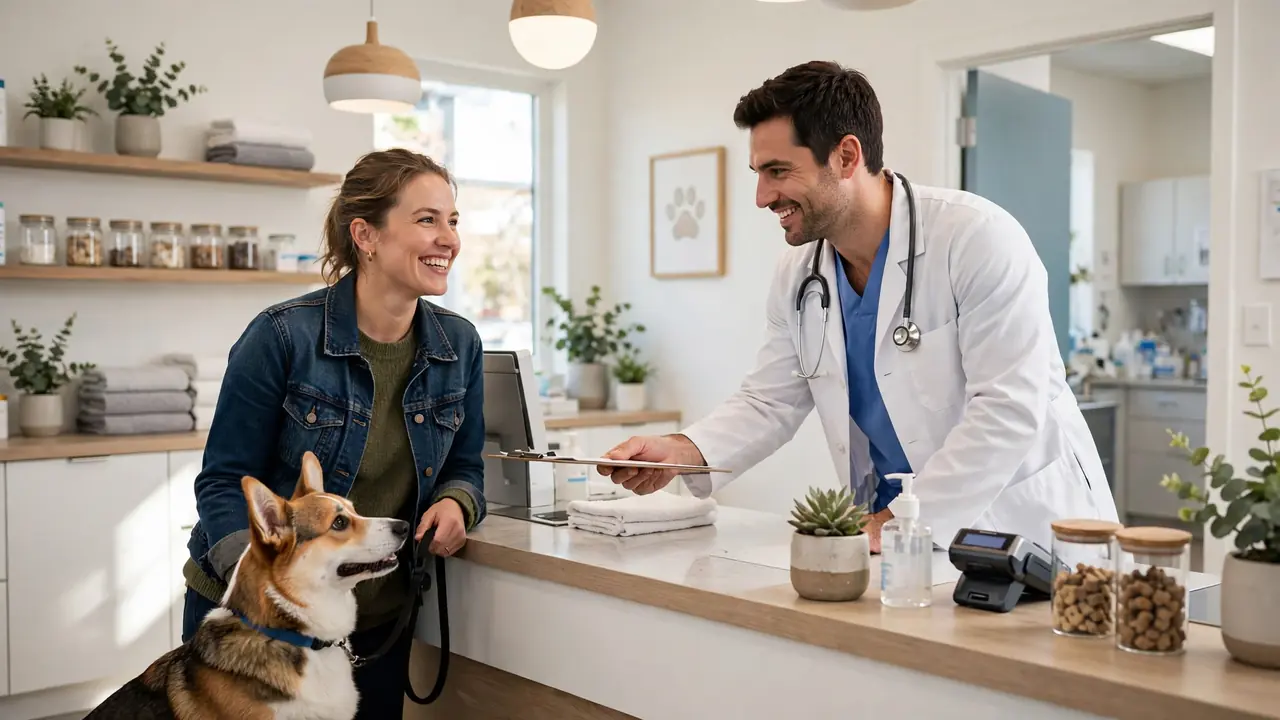
- At the clinic, tell the front desk you will be using your insurer’s direct pay option, not standard reimbursement.
- The clinic submits the estimate or the final invoice to the insurer through the insurer’s system or portal.
- The insurer reviews the charges against your policy and approves its share, often in minutes for straightforward cases.
- You pay your portion, the deductible plus your share, and leave. The insurer settles the rest with the clinic directly.
The advance confirmation in step one is the part people skip, and it is the part that causes most direct-pay failures. Showing up expecting direct pay at a clinic that has never heard of the program, or for a treatment that needs pre-authorization you never got, ends with you paying the full bill anyway. A two-minute call beforehand prevents that.
How It Differs From Normal Reimbursement
Side by side, the two models solve different problems. Reimbursement is universal: it works at any licensed vet in the country, with no advance arrangement, because the insurer never interacts with the clinic. You are the entire payment pipeline, which is both its strength and its weakness.
Direct pay removes you from the middle of the transaction, but it adds two dependencies: the clinic has to participate in the insurer’s program, and the insurer has to approve the charges in something close to real time. When both hold, it is clearly better for cash flow. When either fails, you fall back to standard reimbursement, assuming you can cover the bill.
There is also a paperwork difference worth knowing. Reimbursement puts the filing burden on you: photos, forms, follow-ups. Direct pay shifts much of that to the clinic’s staff, who submit through the insurer’s system as part of checkout. Less work for you is a genuine secondary benefit, though you should still keep copies of every invoice. Our guide to how long claims take covers the timelines direct pay lets you skip.
The Catches Nobody Puts in the Ad
Direct pay is genuinely useful, but the marketing makes it sound more universal than it is. Go in with these limitations clear and you will not be disappointed.
- Your vet has to participate. Many clinics do not, especially smaller practices, and participation is per clinic, not per insurer.
- It often requires pre-authorization, meaning a call or estimate approval before treatment, which is awkward in true emergencies.
- Only the covered share goes to the vet. Your deductible, coinsurance, and any excluded charges are still yours at checkout.
- Coverage is not guaranteed until the claim is reviewed, so an estimate approved in advance can still change.
- Some programs only apply above a minimum bill, so routine visits still go through normal reimbursement.
The emergency limitation is the one to internalize. At 2 a.m. in an ER you have never visited, nobody is setting up direct pay for the first time. The realistic use case is planned procedures and your regular vet, where the relationship and the systems are already in place. Direct pay changes who fronts the money, not how much the insurer covers.
How to Ask Your Vet About It
The conversation is simpler than owners expect. At your next regular visit, ask the front desk a direct question: “Do you work with direct billing from any pet insurance companies?” Use those words, because “direct pay” is insurer marketing language and the clinic may know the program under a different name.
If the answer is yes, ask which insurers and whether there is anything you need to set up in advance. Some clinics have the insurer’s software installed and can run it at checkout with no prep. Others need you to initiate the process with the insurer first. Get the specifics for your clinic rather than relying on the insurer’s website, which may list the clinic as participating based on outdated information.
If the answer is no, ask whether they would consider it. Clinics sometimes join these programs when enough clients ask, and your question plants the seed. In the meantime, standard reimbursement at a vet you trust beats direct pay at a clinic you chose for the billing feature. The UC Davis veterinary school at vetmed.ucdavis.edu offers guidance on evaluating veterinary practices that goes well beyond payment mechanics.
Should You Pick an Insurer for Direct Pay Alone?
For most owners, no. Direct pay is a tiebreaker, not a foundation. The fundamentals that decide whether a policy is good, the exclusions list, the annual limit, the reimbursement math, the premium trajectory, matter far more than how the money moves. A mediocre policy with direct pay is still a mediocre policy.
That said, there are owners for whom it genuinely belongs near the top of the list. If a $3,000 emergency bill would force you to choose between treatment and rent, even temporarily, then the cash-flow protection of direct pay is not a luxury. It is the difference between usable coverage and coverage that exists only on paper. Our guide to whether pet insurance is worth it helps you think through that personal math honestly.
When comparing, ask each insurer three questions: which clinics near me actually participate, does direct pay need pre-authorization, and what happens if the clinic cannot run it at checkout. The answers vary more than the brochures suggest. And keep the cost side in view too: our breakdown of what pet insurance costs shows how premiums differ, because the insurer with the slickest checkout feature is not always the best value. NAPHIA’s member directory at naphia.org is a neutral starting point for identifying established companies to compare.
Frequently Asked Questions
Which pet insurance companies pay the vet directly?
A small number of US insurers offer direct vet payment, generally as an optional feature rather than the default. Availability changes over time, so check current offerings directly with any insurer you are considering rather than relying on older articles.
Does my vet have to agree to direct pay?
Yes. The clinic must participate in the insurer’s program or agree to accept the redirected payment. Always confirm with your specific vet’s office before counting on it, because participation varies by clinic, not just by insurer.
Do I still pay anything at checkout with direct pay?
Yes. You pay your deductible, your coinsurance share, and any charges the policy excludes, such as exam fees on some plans. Direct pay covers the insurer’s share, not the whole bill.
Can I use direct pay at an emergency vet?
Sometimes, but it is unreliable. Emergency clinics you have never visited are unlikely to have the arrangement set up, and true emergencies rarely allow time for pre-authorization. Treat direct pay as a planned-care tool, not an ER guarantee.
Is direct pay the same as the vet billing my insurance?
Essentially, yes, from your perspective. The practical difference from human health insurance is that pet direct pay is the exception: most pet claims still go through you-first reimbursement, and direct pay requires specific setup between the insurer and the clinic.
What happens if direct pay fails at checkout?
You fall back to standard reimbursement: pay the full bill, file the claim with your invoice photos, and get reimbursed. This is why keeping the ability to cover a bill temporarily, through savings or a credit line, still matters even with direct pay.